
“We’ve joined forces with a national firm to better serve you.”
If you’ve been with the same local insurance agency for years, there’s a good chance you’ve received—or will eventually receive—some version of that announcement.
“Your provider has been acquired.” (Read swallowed by a bigger fish)
The message that follows sounds pretty good.
“More resources. Sharp expertise. Better technology. Advanced analytics. Proprietary tools. National capabilities. A deeper bench of specialists.” Blah, blah, blah.
Maybe all of that is true. But there’s a more important question:
Will any of those resources actually make a difference for your business?
Don’t Confuse More Resources with More Value
Large national insurance brokerages can have tremendous capabilities. Sophisticated analytics, loss-control specialists, claims consultants, benchmarking tools and industry experts absolutely exist.
But having access to a resource and receiving value from it are two different things. Completely.
If you’re a middle-market company (heck even “smiddle” which means not quite middle market but not a small business either), you should be asking very specific questions:
- Which of these new resources will actually be available to my company?
- Who will provide them?
- What will they cost?
- How will they improve my risk?
- How will they affect my insurance program?
- How will they help lower my Total Cost of Risk?
- Who is responsible for making sure I actually receive them?
Don’t be satisfied with a presentation about everything the organization can do.
Ask what it is going to do for you.
The Small-Fish Problem
Your long-term producer may have been one of the reasons you stayed with the agency.
Then the acquisition happens. Or perhaps your producer retires, leaves or cashes out. Your account gets reassigned. Maybe you end up with a service center or a less-experienced account team.
Nothing is necessarily wrong with the new organization. All of a sudden you’re no longer a particularly significant client within it.
You went from being an important account at a local agency to being one of thousands of accounts inside an organization managing billions of dollars in premium.
Not a worse client. Just a smaller one.
That’s when businesses sometimes begin noticing the difference:
Renewals become transactional. Senior people aren’t as involved. Calls get routed to unfamiliar people. The people servicing the account don’t know the history. The relationship that took years to build disappears. All those “world-class resources” don’t mean very much if no one is bringing them to the table.
The Question Isn’t “Do They Have Resources?”
Here’s the question you ask:
Does my broker have a strategy for my business?
Because your insurance program shouldn’t be judged simply by the premium you pay.
Premium is only one component of your Total Cost of Risk (TCOR).
Your real cost can include:
- Insurance premiums
- Deductibles and retained losses
- Uninsured or underinsured losses
- Employee injuries
- Overtime caused by accidents and disruptions
- Lost productivity
- Product loss
- Property damage
- Legal expenses
- Regulatory fines
- Additional training
- Employee turnover
- Business interruption
- Damage to your reputation
Saving 8% on insurance premium while ignoring hundreds of thousands of dollars in preventable losses isn’t a good deal.
That’s why the conversation should be bigger than:
“Can you get me a better quote?”
The better question is:
“Can you help me develop a better strategy?”
What is our strategy for the next three years? Not just the next renewal.
Ask what they see when they look at your organization.
Where are your largest loss opportunities?
What is driving your Total Cost of Risk?
How are your claims trending?
How do underwriters view your organization?
What can you do over the next 12–24 months to become a more attractive risk?
Which insurance companies should be interested in your account—and why?
When should the account be marketed?
When should it not be marketed?
And if the broker now has access to all these additional resources:
Which ones are you recommending for us, specifically?
That’s the test.
Big Isn’t Bad. Small Isn’t Better.
This isn’t an argument against large insurance brokers.
Some businesses absolutely need the resources of a national or global brokerage. And some acquired agencies maintain exceptional local teams while gaining capabilities that genuinely benefit their clients.
Likewise, being a small independent agency doesn’t automatically make someone a better advisor.
The logo on the letterhead isn’t the issue.
The issue is whether someone understands your business well enough to develop a strategy around it—and has the expertise, market relationships and resources necessary to execute that strategy.
That’s what matters.
Find Your Suite Spot
At Morton Insurance & Risk Management, we believe getting the best deal on insurance starts long before anyone asks an insurance company for a quote.
It starts with understanding your business. Your risks, losses, and current insurance-buying process, position in the insurance marketplace, and your Total Cost of Risk (TCOR).
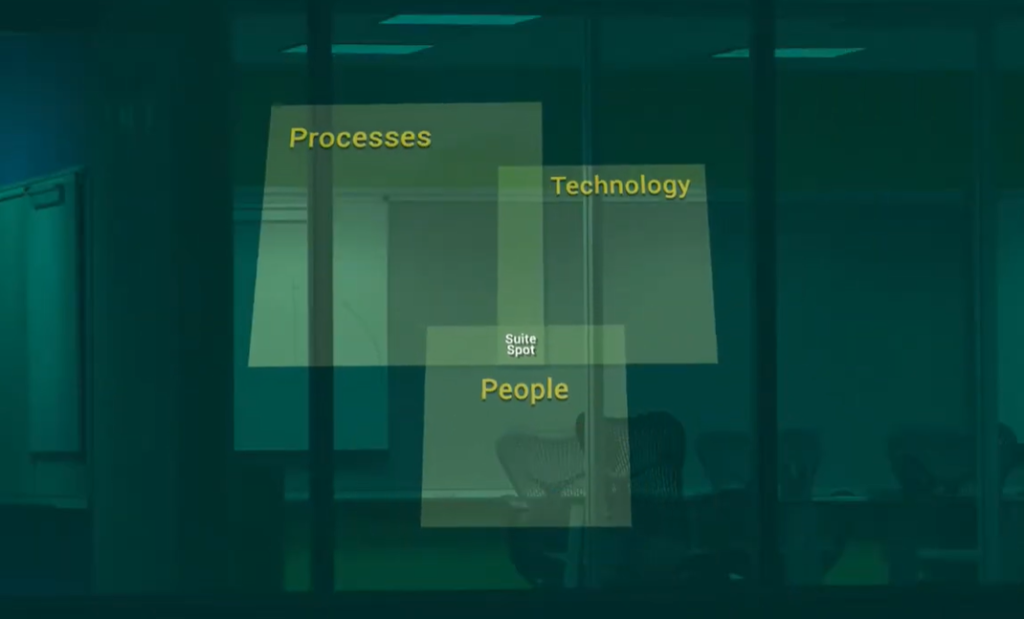
That’s the thinking behind The Suite Spot—our process for helping organizations develop a deliberate insurance and risk-management strategy rather than simply shopping for another quote.
Start with a better question:
Do we have a strategy?
If the answer isn’t clear, that may tell you more than another quote ever will.